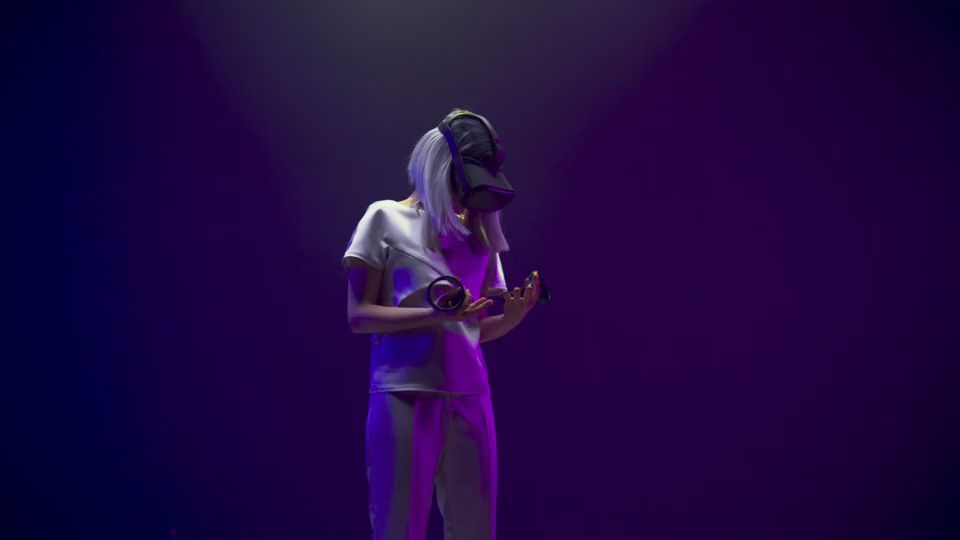

I can't help but feel a surge of optimism every time I look at the Extended Reality (XR) landscape. While some might still see it as a futuristic concept, something out of a sci-fi movie, the truth is, XR is here, it's accessible, and it's poised to fundamentally transform how businesses connect with their audiences, train their teams, and even design their products. Forget the clunky prototypes of yesteryear; we're at a pivotal inflection point, a moment where the convergence of cutting-edge technology and real-world application is creating unprecedented opportunities.
For years, the promise of virtual, augmented, and mixed reality felt just out of reach. But in 2025, we're witnessing a remarkable acceleration. The latest market studies paint a clear picture of explosive growth. The global XR market, valued at USD 183.96 billion in 2024, is projected to soar to USD 1,625.48 billion by 2032, exhibiting a staggering CAGR of 30.4% [2]. Another comprehensive analysis forecasts the Extended Reality market reaching USD 44.14 billion by 2030, reflecting a 42.36% CAGR [3]. This isn't just growth; it's a paradigm shift, a clear signal that AR eyewear alone is projected to reach 15 million units by 2030, with over 85% featuring displays [1]. By extension, the broader XR ecosystem is on track to become the next major consumer electronics platform, potentially even replacing our beloved smartphones as the primary interface for digital interactions.
But what does this mean for your business, especially if you're just starting to consider the possibilities of XR? It means opportunity. It means a chance to engage your customers, employees, and partners in ways that traditional media simply cannot. It means creating experiences that don't just inform, but truly immerse, leaving a lasting impression that drives action and fosters deeper connections. And here's the exciting part: you don't need to wait for the distant future of sleek AR glasses to get started. The entry point is already here, readily available, and incredibly powerful: standalone VR headsets like the Meta Quest 3.
The Numbers Don't Lie: A Market Primed for Explosive Growth
Let me share some numbers that might make you sit up and take notice. The global XR market is experiencing a surge, with projections indicating a significant increase in value over the next decade [2, 3]. These aren't just optimistic projections; they're based on real, measurable trends happening right now.
What's driving this explosive growth? Several key factors are converging to create the perfect storm for XR adoption. The surge in 5G technology is a game-changer, providing the low-latency, high-bandwidth connectivity that XR applications demand [2, 3]. This isn't just about faster internet; it's about enabling real-time experiences, remote control access, industrial automation, and mobility applications that were previously impossible. When you can deliver sub-20 millisecond latency, suddenly multi-user VR collaboration becomes seamless, and AR applications can respond to real-world changes instantaneously.
But perhaps most importantly, we're seeing a fundamental shift in how businesses view XR. It's no longer just about gaming and entertainment, though those sectors continue to drive significant adoption. Rapid enterprise adoption across manufacturing, healthcare, and defense is now outpacing consumer entertainment, transforming XR from a gaming novelty into a mission-critical productivity tool [3]. Companies are discovering that implementing XR helps boost productivity by 10 to 20% while lowering operational costs [2]. That's not just innovation for innovation's sake; that's measurable business impact.
The geographic distribution of this growth is equally telling. North America currently dominates the global market with a 41.91% share in 2024 [2], benefiting from the presence of multiple market players, high technology exposure, and increasing smart device usage. However, Asia Pacific is projected to grow with the highest CAGR during the forecast period, driven by increasing technology investments and a surge of industry-related startup firms [2]. This global momentum means that XR isn't just a Silicon Valley phenomenon; it's a worldwide transformation that's creating opportunities across all markets.
The Technology Convergence: AI Meets Immersive Reality
Here's where things get really exciting. We're not just talking about better headsets or improved graphics. The most significant transformation occurring in 2025 centers on the convergence of AR technology with large language models (LLMs), positioning AR glasses as AI interfaces [1]. This integration represents a paradigm shift from standalone computing devices to contextually-aware, AI-powered interfaces that can understand and respond to real-world environments in real-time.
Think about what this means for your business. Imagine training scenarios where AI can adapt the difficulty and content in real-time based on how well an employee is performing. Picture customer service applications where AR overlays can provide instant, contextually relevant information about products or services. Consider marketing campaigns where AI can personalize the immersive experience based on user behavior and preferences, creating truly one-to-one engagement at scale.
This convergence is being driven by major technology giants who recognize that the combination of spatial computing and generative AI will create entirely new categories of user experiences and applications [1]. The result is that XR is becoming more intelligent, more responsive, and more valuable to businesses across every sector.
Beyond the Hype: The Tangible Benefits of Immersive Experiences
So, why should you care about XR now? Because immersive experiences aren't just about flashy new tech; they're about transforming attention into action and emotion into measurable results. At Immerstory, we've seen firsthand how the power of XR can revolutionize marketing, training, and brand engagement. It boils down to a few key, undeniable advantages:
Presence: The Power of ‘Being There'
Imagine your audience not just seeing your brand story, but living it. Immersive XR creates that powerful illusion of ‘being there,' making brand narratives feel incredibly real and emotionally resonant. This sense of presence isn't just a cool trick; it strengthens emotional connections and makes interactions far more memorable than any traditional media ever could. It's the difference between reading about a product and virtually holding it in your hands, exploring its features as if it were right in front of you.
Engagement: From Spectator to Participant
In a world saturated with fleeting digital ads, how do you truly capture and hold attention? XR is the answer. By letting users actively explore, interact, and participate, immersive experiences achieve levels of engagement that most digital campaigns can only dream of. People don't just passively consume content; they become active participants in your message, leading to longer, deeper engagement and a more profound understanding of what you offer. This is why businesses are increasingly turning to XR, with rapid enterprise adoption across manufacturing, healthcare, and defense now outpacing consumer entertainment, turning XR into a mission-critical productivity tool [3].
Memory: Impressions That Last
Because immersive experiences engage multiple senses – sight, sound, and even a sense of spatial awareness – they create memories that stick. Long after the headset comes off, the experience lingers. This translates directly into higher brand recall, greater recognition, and a lasting impression that far outlasts traditional advertising. Think about it: how many ads do you remember from last week? Now, how many truly immersive experiences have you had that you can still vividly recall?
Shareability: Organic Buzz for Your Brand
Immersive XR creates unique, social-worthy moments that users genuinely want to share. Whether it's through social media posts, photos, or enthusiastic word-of-mouth, this organic buzz extends your brand's reach far beyond your initial audience. When an experience is truly unforgettable, people become your most powerful advocates, spreading your message authentically and effectively.
Next-Level Gamification: Learning Through Play
Gamified XR transforms your brand into an interactive playground. It blends fun, interactivity, and immersion to keep users engaged, motivated, and coming back for more. This isn't just about entertainment; it's about performance-driven storytelling that can revolutionize training, product demonstrations, and customer loyalty programs. Imagine employees learning complex procedures in a risk-free virtual environment, or customers exploring product configurations through an engaging game – the possibilities are endless.
Immerstory's Vision: Gamified Storytelling in an XR World
At Immerstory, we're building towards this future. Our focus on gamified XR storytelling isn't just about creating cool experiences; it's about harnessing the fundamental power of immersive technology to create unforgettable marketing, training, and brand moments. We understand that in a world where attention is the scarcest commodity, you need more than just good content – you need experiences that truly engage, that create emotional connections, and that drive measurable results.
Our approach combines emotional storytelling, interactive game mechanics, and immersive design to create memorable experiences that captivate users and bring your message to life. Whether your audience is stepping into a virtual world, interacting with digital objects in a physical space, or overlaying information in real-time, we help you engage them like never before.
This philosophy aligns perfectly with the market trends we're seeing. The gaming sector dominated the XR market in 2023 due to demand for immersive experiences [2], but we're also seeing significant adoption in healthcare for training and diagnostics, in retail for product showcases, and in education for interactive learning. Our modular approach – from White Label Experiences for quick deployment to Custom Storyworlds built from scratch around your brand – provides flexible solutions for businesses at every stage of their XR journey.
Consider our White Label Experiences: these are ready-made XR mini-games that can be lightly customized with your brand's logo and colors, designed for quick turnaround and fixed pricing. They're ideal for trade shows, events, or campaigns that need a reliable attention-grabber without full development effort. The setup is plug-and-play with XR hardware, requiring no special booth build, making them perfect for businesses just starting to explore XR possibilities.
For companies ready to go deeper, our Custom Storyworlds offer fully tailored XR experiences developed from scratch based on your story, product, or message. Every element – from script and mechanics to design and interaction – is developed in close collaboration to match your brand goals and engage your audience in a unique way. This is where the real magic happens, where we can leverage the full power of XR to create experiences that are not just memorable, but transformative.
The Accessibility Revolution: Standalone Headsets as the Great Equalizer
One of the most significant developments in the XR landscape is the emergence of truly accessible, standalone devices. The Meta Quest 3 represents a watershed moment – a device that delivers high-quality VR experiences without the need for expensive external computers, complex setup procedures, or technical expertise. This accessibility is crucial because it removes the traditional barriers that have kept many businesses from experimenting with XR.
The hardware segment currently controls 53.2% of XR revenue, but services are forecast to grow fastest at 42.5% CAGR through 2030 [3]. This shift indicates that as hardware becomes more accessible and affordable, the real value and growth will come from the experiences, content, and services built on top of that hardware. This is exactly where companies like Immerstory can help businesses unlock the potential of XR without getting bogged down in technical complexities.
Head-mounted displays held 42.7% of the Extended Reality market share in 2024, with spatial and holographic displays set to grow at 43.1% CAGR to 2030 [3]. But here's the key insight: You don't need to wait for the next generation of displays to start benefiting from XR. The current generation of standalone headsets is already powerful enough to deliver compelling business applications, from immersive training modules to engaging product demonstrations.
The beauty of starting with standalone VR headsets like the Meta Quest 3 is that they provide an immediate, tangible way to begin building XR expertise within your organization. Your teams can start learning how to create compelling immersive content, how to design for spatial interaction, and how to measure the effectiveness of XR experiences. These skills and insights will be invaluable as the technology continues to evolve towards the AR-dominated future that market analysts predict.
Overcoming the Challenges: A Realistic Look at XR Adoption
I'd be doing you a disservice if I didn't acknowledge that XR adoption isn't without its challenges. High implementation costs remain a significant barrier, particularly when factoring in the expenses of high-fidelity headsets and tactile sensors [2]. User motion sickness and ergonomic limitations still affect up to 40% of users in full-immersion VR sessions [3]. Data privacy concerns around eye and hand-tracking analytics are creating regulatory scrutiny, particularly in the EU and California [3].
But here's the thing: every transformative technology faces these kinds of challenges in its early stages. The key is understanding how to navigate them intelligently. The high implementation costs that once made XR prohibitive for most businesses are being addressed by the rise of accessible standalone devices and cloud-rendered XR solutions. Motion sickness and ergonomic issues are being tackled through advances in display technology, predictive algorithms, and better understanding of user comfort factors.
More importantly, the benefits of XR adoption are beginning to far outweigh these challenges for businesses that approach implementation strategically. Companies that start with focused, well-defined use cases – like product demonstrations at trade shows or specific training modules – can achieve clear ROI while building internal expertise and comfort with the technology.
This is where Immerstory's approach becomes particularly valuable. Rather than trying to solve every possible XR challenge at once, we help businesses identify the specific applications where XR can deliver immediate, measurable value. Whether it's creating more engaging marketing experiences, improving training effectiveness, or enhancing customer engagement, we focus on building solutions that work within current technological constraints while positioning you for future opportunities.
The Competitive Advantage of Early Adoption
Let me paint a picture of what's happening in the business world right now. While some companies are still debating whether XR is ready for prime time, others are already building competitive advantages through strategic XR adoption. They're creating more engaging customer experiences, more effective training programs, and more memorable brand interactions. They're building internal expertise and developing content libraries that will give them a significant head start as the technology continues to mature.
The companies that are succeeding with XR today aren't necessarily the ones with the biggest budgets or the most technical expertise. They're the ones that understand how to align XR capabilities with specific business objectives. They're the ones that recognize that XR isn't just about technology; it's about storytelling, engagement, and creating experiences that resonate with their audiences.
This is particularly important when we consider the trajectory towards AR dominance. The Research and Markets report makes it clear that AR eyewear is expected to become the next major consumer electronics platform, with the potential to replace smartphones as the primary interface for digital interactions [1]. But this transition won't happen overnight, and it won't happen in isolation from the VR experiences that businesses are creating today.
The content strategies, interaction design principles, and user experience insights that companies develop through VR implementation today will translate directly to AR applications tomorrow. The teams that understand how to create compelling spatial experiences, how to design for immersive interaction, and how to measure the effectiveness of XR campaigns will be the ones best positioned to capitalize on the AR revolution when it fully arrives.
Looking Forward: The Inevitable Transition to an XR-First World
As I look at the data, the trends, and the technological developments happening right now, I'm convinced that we're not just witnessing the growth of a new technology sector – we're witnessing the emergence of a new computing paradigm. The convergence of AI and immersive technologies, supported by 5G infrastructure and increasingly sophisticated hardware, is creating the foundation for a world where digital and physical experiences are seamlessly integrated.
The question for businesses isn't whether this transition will happen, but how quickly they can position themselves to benefit from it. The companies that start building XR capabilities today – even with current-generation standalone headsets – will be the ones that lead their industries tomorrow. They'll have the expertise, the content, and the organizational knowledge to capitalize on new opportunities as they emerge.
This is why I'm so optimistic about the current moment in XR. We're at a unique inflection point where the technology is accessible enough for businesses to start experimenting and learning, but early enough in the adoption curve that there's still significant competitive advantage to be gained from being an early mover.
At Immerstory, we're not just building XR experiences; we're helping businesses prepare for this XR-first future. Whether through our White Label Experiences that provide immediate access to XR capabilities, our Custom Storyworlds that create unique competitive advantages, or our Immerstory Originals that showcase the full potential of immersive storytelling, we're committed to helping businesses navigate this transformation successfully.
The XR revolution is happening now, and the opportunities for businesses that embrace it are unprecedented. The question isn't whether you should get involved with XR – it's how quickly you can start building the capabilities that will define your competitive position in the years to come.
References
[1] Research and Markets. (2025). The Global Virtual, Augmented and Mixed Reality Market 2026-2036
[2] Fortune Business Insights. (2025). Extended Reality [XR] Market Size, Share, Industry Report 2032
[3] Mordor Intelligence. (2025). Extended Reality (XR) Market Size, Trends & Share Analysis, 2025-2030